



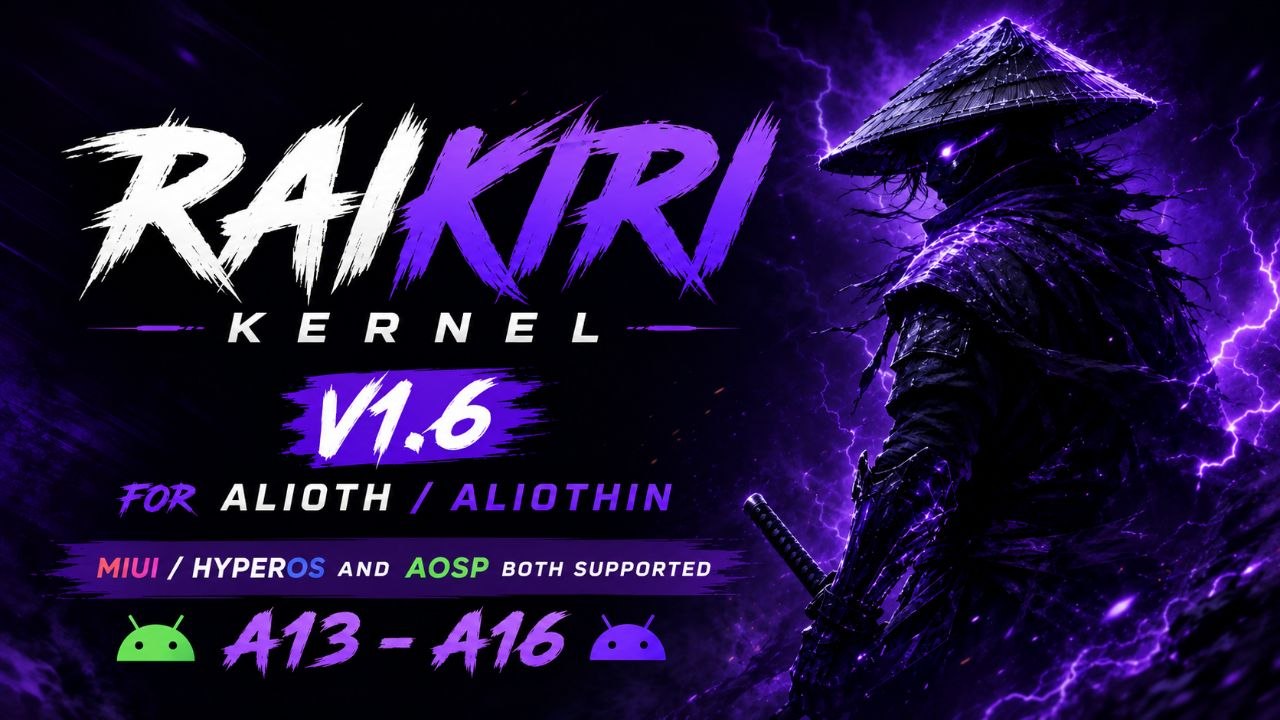
The Raikiri Kernel v1.6 has been released for the POCO F3 (Alioth), bringing the latest upstream Linux kernel improvements along with several optimizations aimed at improving performance, memory management, and network responsiveness. Compatible with Android 13, Android 14, Android 15, and Android 16, this release continues to build upon the Redline Kernel base while integrating the latest updates from the LineageOS SM8250 kernel.
One of the key highlights of this update is the inclusion of the latest KernelSU Next, support for MIUI runtime memory optimizations, the adoption of BBR as the default TCP congestion control algorithm, and additional CPU scheduling enhancements. Whether you’re running an AOSP-based ROM or HyperOS/MIUI, Raikiri Kernel v1.6 aims to deliver a balanced combination of performance, battery efficiency, and stability.
Raikiri Kernel v1.6 Information
- Kernel Name: Raikiri Kernel
- Version: 1.6
- Android Support: Android 13, Android 14, Android 15, Android 16
- Device: POCO F3 (Alioth)
- Build Type: Stable
- Updated: 16 July 2026
What’s New in Raikiri Kernel v1.6?
This release focuses on keeping the kernel aligned with the latest upstream improvements while adding practical optimizations for everyday performance.
Synced with Latest LineageOS Kernel
Raikiri Kernel has been synchronized with the latest LineageOS android_kernel_sm8250 source.
Regular upstream synchronization brings numerous improvements, including bug fixes, security patches, scheduler refinements, driver updates, and general stability enhancements. Even when individual changes are not visible to end users, these updates help maintain compatibility with newer Android releases and improve long-term reliability.
CPU Sets Assist Added
The kernel now includes cpusets assist, a feature designed to improve how the operating system assigns processes to CPU cores.
More efficient CPU allocation can help maintain smooth multitasking while ensuring that demanding applications receive the resources they need without unnecessarily increasing power consumption.
BBR Enabled as Default TCP Congestion Control
Raikiri Kernel now uses BBR (Bottleneck Bandwidth and Round-trip propagation time) as the default TCP congestion control algorithm.
Compared with traditional congestion control methods, BBR is designed to optimize data transmission by estimating available bandwidth and network latency. Depending on network conditions, users may notice:
- Improved download consistency
- Lower latency during network activity
- Better responsiveness in online gaming
- More stable streaming performance
Actual improvements will vary depending on your internet connection and service provider.
Updated KernelSU Next
The kernel includes the latest KernelSU Next implementation.
Users who rely on KernelSU for root access should install the latest KernelSU Next Manager to ensure full compatibility with this release.
MIUI Runtime Memory Optimization Support
Support has been added for MIUI runtime memory optimizations, improving compatibility for users running HyperOS or MIUI-based ROMs.
These optimizations help the kernel work more effectively with Xiaomi’s memory management framework, contributing to smoother multitasking and better system behavior under heavier workloads.
Lower Default GPU Idle Frequency
The default GPU idle frequency has been reduced to 150 MHz.
Lower idle GPU frequencies can reduce unnecessary power consumption when the graphics processor is under minimal load. This may contribute to improved battery efficiency during light tasks such as messaging, web browsing, or standby without affecting peak graphics performance under demanding workloads.
Official Changelog
- Synced with the latest LineageOS
android_kernel_sm8250 - Added cpusets assist
- Enabled BBR as the default TCP congestion control algorithm
- Updated to the latest KernelSU Next
- Added support for MIUI runtime memory optimizations
- Reduced default GPU idle frequency to 150 MHz
Performance and Daily Experience
Raikiri Kernel v1.6 is primarily a maintenance and optimization release rather than a feature-heavy update. By combining the latest LineageOS kernel improvements with better CPU scheduling, modern networking optimizations, and refined memory handling, the kernel aims to provide a smoother overall experience.
The inclusion of BBR can benefit users who frequently play online games or stream media, while the lower GPU idle frequency may improve battery efficiency during everyday usage. Meanwhile, KernelSU Next support ensures compatibility with the latest root ecosystem for users who require advanced customization.
Compatibility
Raikiri Kernel supports:
- Android 13
- Android 14
- Android 15
- Android 16
- AOSP-based ROMs
- HyperOS
- MIUI
- Standard battery models
- 5000 mAh battery variants
Different kernel packages are available depending on your ROM type and battery configuration. Be sure to follow the maintainer’s naming instructions before flashing.
Installation Notes
Before flashing Raikiri Kernel v1.6, keep the following in mind:
- Carefully follow the official flashing guide.
- Rename the kernel package according to your ROM and battery configuration if required.
- Use the latest KernelSU Next Manager.
- Compatible with both AOSP and HyperOS/MIUI ROMs.
- Always create a backup before flashing a custom kernel.
Important Links
Kernel Source:
https://github.com/Sayemx18/kernel_xiaomi_sm8250
Support Group:
https://t.me/kernel_alioth
Official Channel:
https://t.me/raikiri_alioth
Credits
Special thanks to everyone who contributed to this release.
- Maintainer: @whoeverx24
- Kernel based on Redline Kernel
- Integrated with the latest LineageOS Qualcomm SM8250 kernel source
- Thanks to @martin_tiw and @Andres_Giron for testing and feedback
Final Thoughts
Raikiri Kernel v1.6 is a thoughtful refinement for POCO F3 users who want a stable, up-to-date kernel across Android 13 through Android 16. Instead of chasing benchmark numbers, this release focuses on practical improvements such as upstream LineageOS synchronization, better CPU task management, modern BBR networking, updated KernelSU Next support, and enhanced compatibility with both AOSP and HyperOS. These changes make it a solid option for users seeking dependable daily performance, efficient battery behavior, and broad ROM compatibility on the Alioth platform.